
Battery manufacturing example
One shared source of context for a battery plant.
Connect live plant events with engineering knowledge, let agents do the legwork and keep engineers in charge of the decision.
See the architecture
Bring live events and engineering documents into the same picture.
Both are mapped to a shared manufacturing model, so an alarm, a process step and the right procedure can be connected.
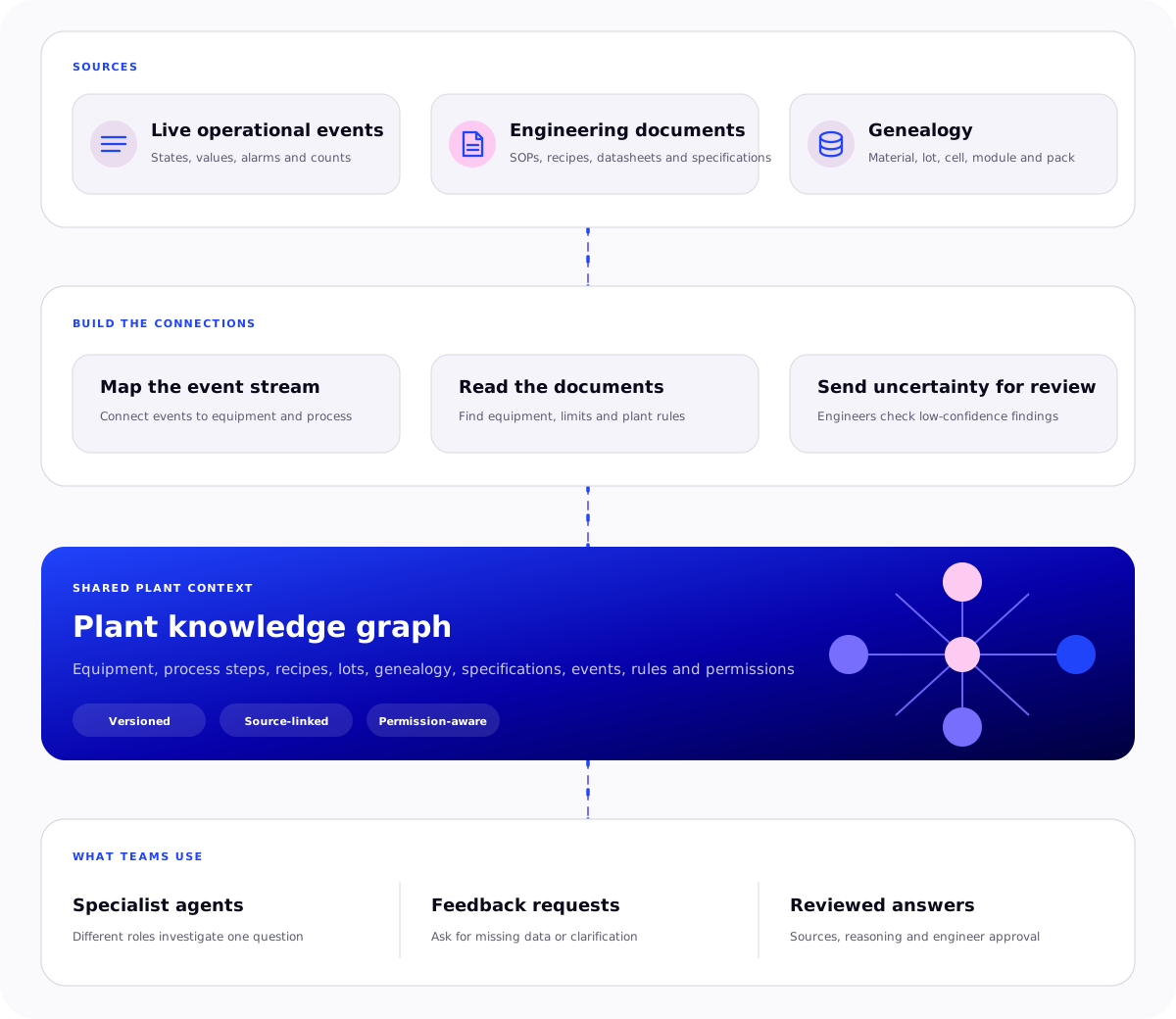
Sources
Live operational events
Machine states, values, alarms and counts
Engineering documents
SOPs, recipes, datasheets and specifications
Genealogy
Material, lot, cell, module and pack history
Build the connections
Map the event stream
Connect events to equipment and process steps
Read the documents
Find equipment, limits, rules and applicability
Send uncertain items for review
Engineers check low-confidence findings
What teams use
Specialist agents
Different roles investigate the same question
Feedback requests
Ask for missing data or clarification
Reviewed answers
Sources, reasoning and engineer approval
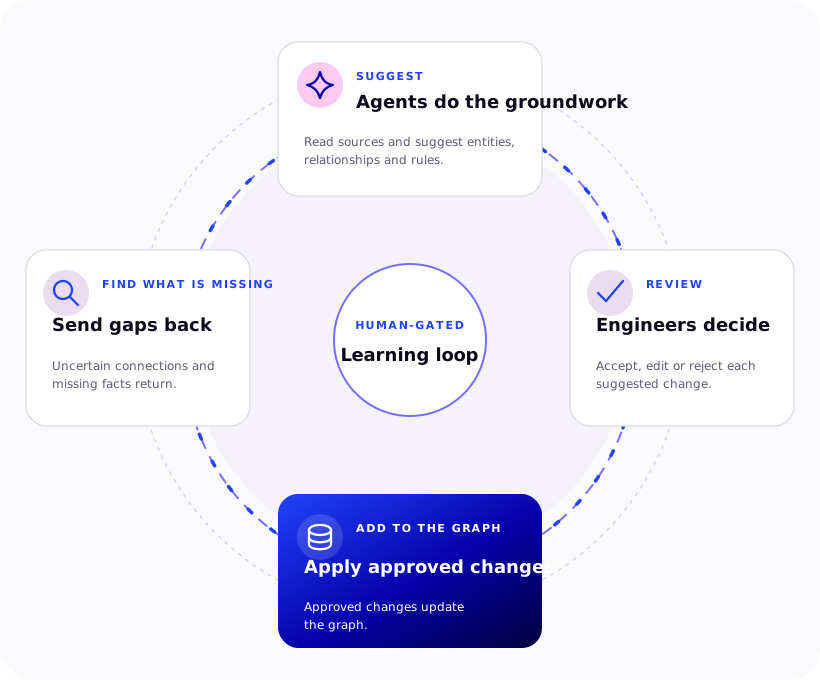
Let agents do the groundwork. Keep engineers in charge.
Agents suggest new entities, relationships and rules as they read the sources. Engineers review every change before it becomes part of the graph.
Look back at any answer. Each answer stays tied to the graph version and sources that produced it.
- SuggestAgents read the sources and suggest entities, relationships and rules.
- ReviewProcess engineers accept, edit or reject each proposed change.
- Add to the graphApproved changes are applied to the live stream and document set.
- Find what is missingUncertain connections and unanswered questions go back for review.
Test it with the questions engineers actually ask.
A question set agreed with plant engineers checks whether answers are correct, complete and backed by useful evidence.
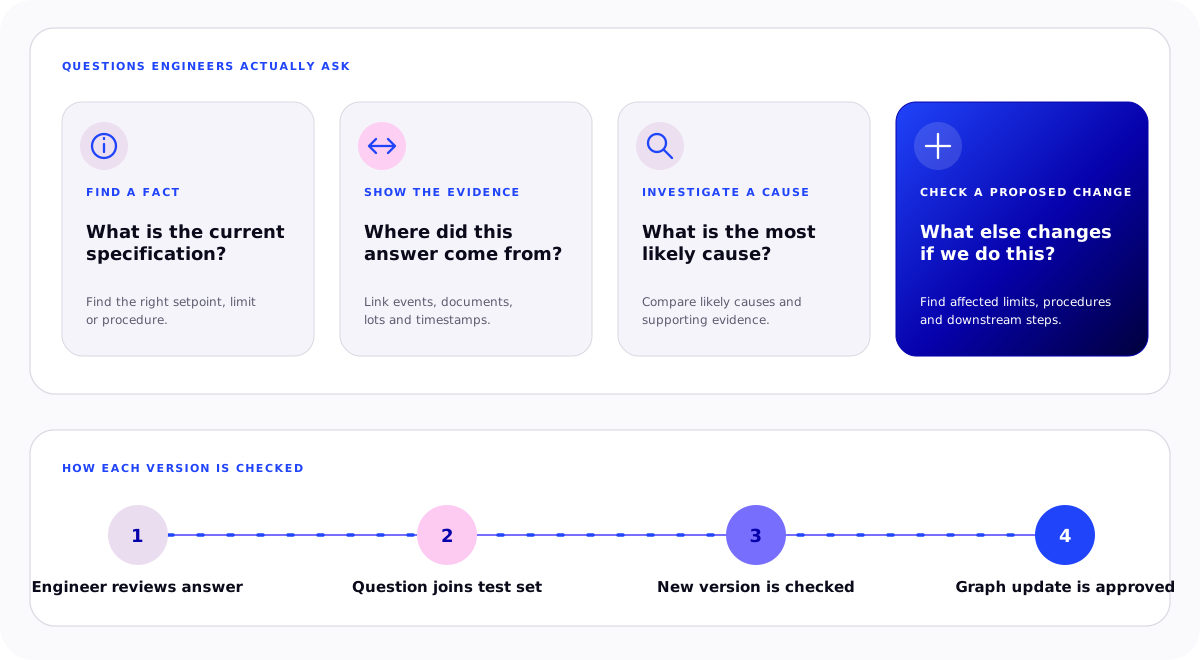
Find a fact
What is the current specification?
Return the right setpoint, limit or procedure for this product and process.
Show the evidence
Where did this answer come from?
Link the relevant events, documents, lots and timestamps.
Investigate a cause
What is the most likely cause?
Compare likely causes across process areas and show the supporting evidence.
Check a proposed change
What else changes if we do this?
Find the affected specifications, procedures, limits and downstream process steps.
Keep the same graph, whichever model setup you choose.
Models can run inside the plant or through a controlled gateway. Plant context and access controls stay consistent.
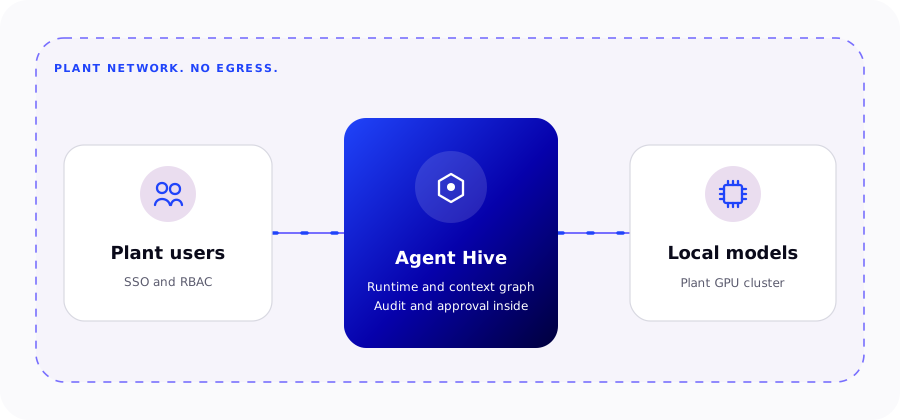
Run everything inside the plant network.
The graph, agents and models run locally. Updates arrive as signed offline packages, with no data leaving the site.
- Local model serving
- Read-only plant connectors
- Plant SSO, RBAC and audit
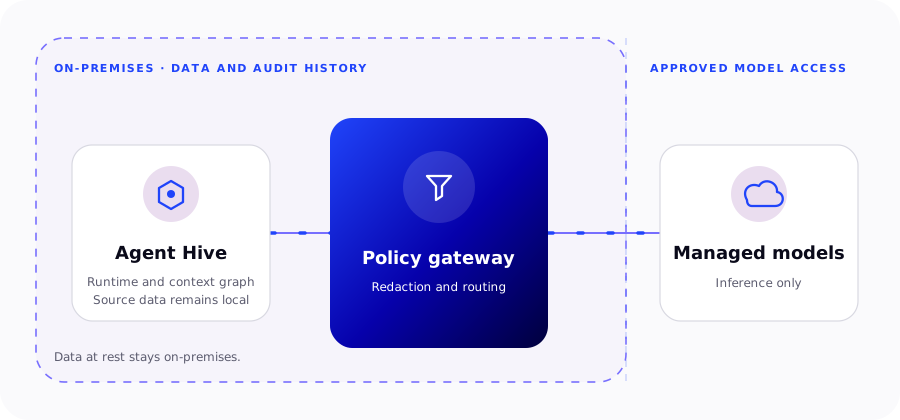
Keep plant data local and use approved models.
A policy gateway controls what is sent, which model receives it and what comes back.
- Per-agent model routing
- One controlled egress path
- Graph and source data remain local
Want the technical detail?
Share the full implementation brief with your team.
It covers the source model, graph-building process, evaluation approach and both deployment options.
SVG library